How can I tell if I’ve ovulated? Reliable signs to help you identify ovulation

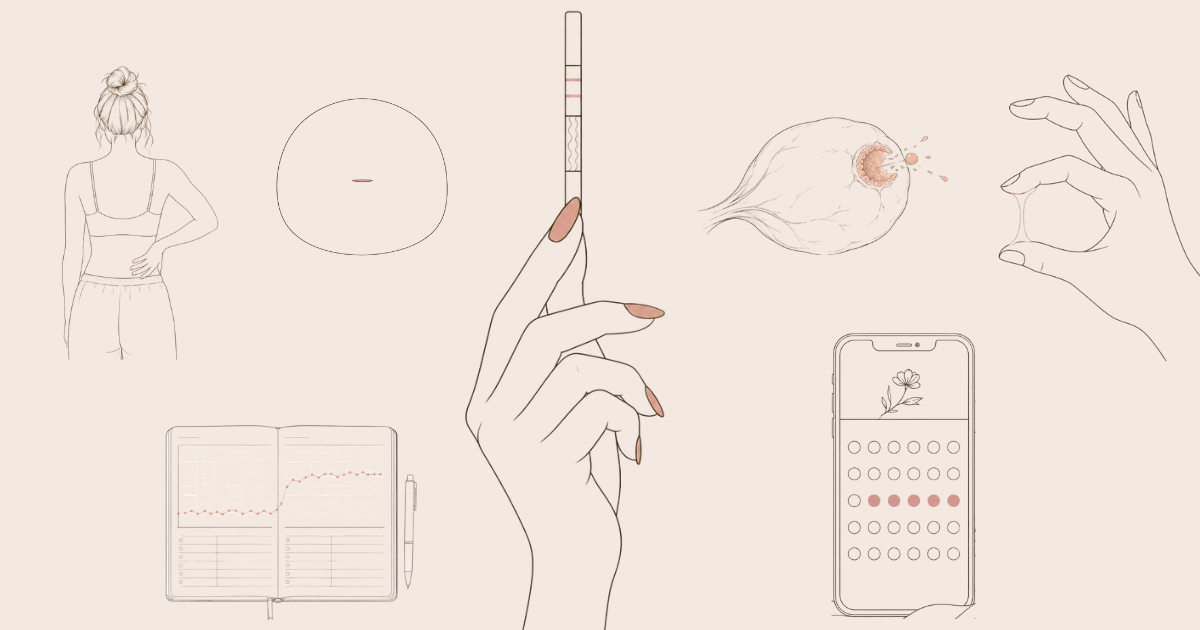
Cervical mucus, lower abdominal pain, a positive ovulation test, a rise in temperature… There are many signs associated with ovulation. But they don’t all provide the same information.
Some indicate that ovulation is approaching, others may simply accompany it, while certain changes appear after ovulation. Understanding this timeline helps avoid a common confusion: predicting ovulation, identifying a fertile window, and noticing signs consistent with a past ovulation are not the same thing.
In practice: No single symptom can reliably indicate the exact time of ovulation. Looking at a combination of signs is more informative than a date calculated on a calendar.
What exactly is ovulation?
During the follicular phase, one ovarian follicle typically becomes dominant. The rise in estrogen then helps trigger the LH surge, which usually precedes ovulation by about one to two days. The follicle then ruptures and releases the egg. After ovulation, it transforms into the corpus luteum and secretes progesterone, among other hormones. [1–3]
Ovulation itself is therefore a single event, not a period lasting several days. In contrast, the fertile window is longer: the ASRM traditionally defines it as the six days ending on the day of ovulation. [2]
Ovulation and the fertile window do not refer to the same thing.
Is it possible to calculate your ovulation date?
The “14th-day” rule is a theoretical estimate, not a biological rule. The first part of the cycle can vary, even in the same person.
A prospective study published in 2026, which tracked women over several cycles, confirmed significant variability in the day of ovulation: 96.5% of participants showed a variation of at least four days during the follow-up period. [4] Previous research had already shown that the fertile window can occur at very different times in the cycle, even when cycles are usually regular. [5]
An app based solely on past period dates can therefore estimate a probable ovulation, but it cannot observe what is actually happening in the current cycle.
Calculating a probable ovulation is not the same as observing an actual ovulation.
What are the signs that ovulation is approaching?
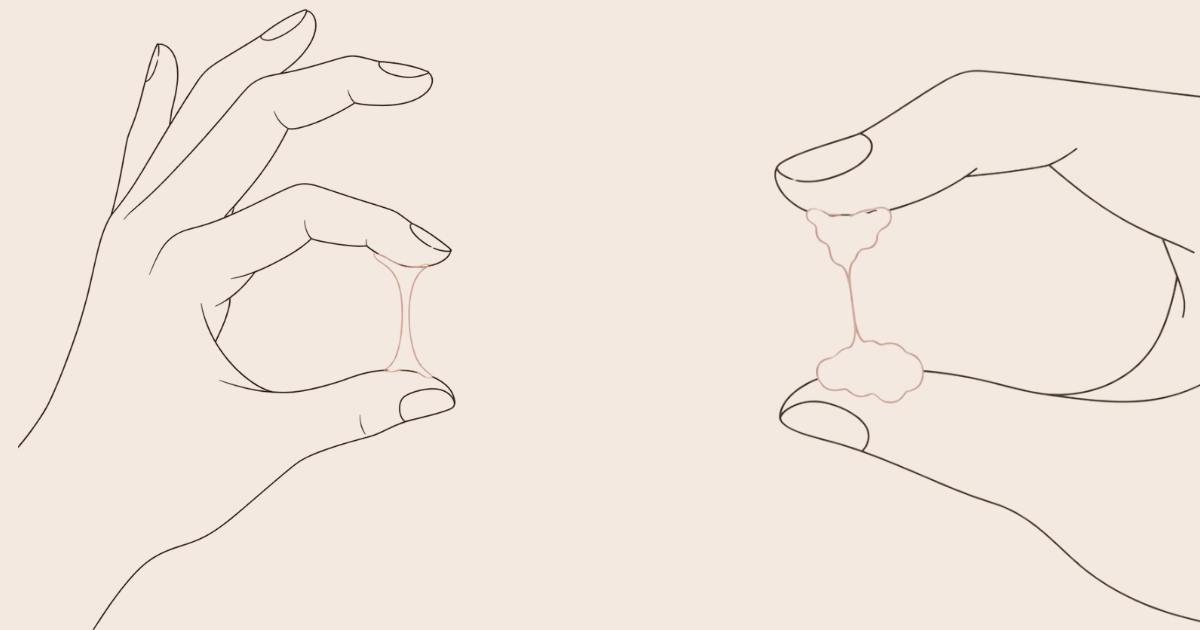
Under the influence of estrogen, cervical mucus generally changes as ovulation approaches: it becomes more abundant, more fluid, slippery, or stretchy. It primarily indicates the onset of the fertile window. Prospective studies show that the quality of the mucus is closely associated with the daily probability of conception. [6]
However, highly fertile mucus alone does not prove that ovulation has actually occurred.
The Cervix
The cervix can also change under the influence of hormones: it tends to become longer, more flexible, and more open during the fertile period. Observing the cervix can supplement other signs, but it is not, on its own, proof of ovulation. [3]
LH Urine Tests
Ovulation tests detect the surge in LH that usually precedes ovulation. They can therefore be useful for identifying when ovulation is approaching. [1,3]
However, a positive LH test measures a hormonal signal that occurs earlier in the process: it does not directly indicate follicular rupture. A positive test result, therefore, does not, on its own, prove that ovulation has actually occurred.
How can you tell if ovulation has likely occurred?
The Rise in Basal Body Temperature
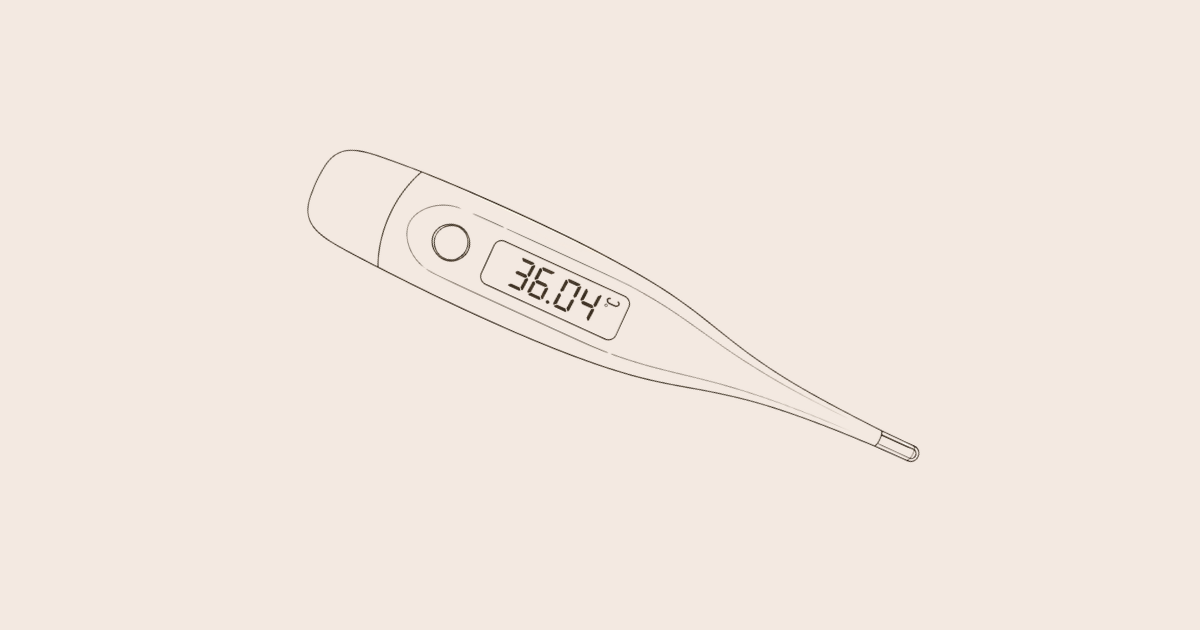
After ovulation, the progesterone produced by the corpus luteum has a thermogenic effect. Basal body temperature then tends to rise and remain at a higher level during the luteal phase. [1,3]
Temperature therefore provides primarily retrospective information: it does not predict ovulation. A single elevated reading is also insufficient, as temperature can be influenced by sleep, illness, alcohol, unusual schedules, or measurement conditions.
An interpretable temperature shift is consistent with a transition to the post-ovulatory phase, but it does not allow for the follicular rupture to be dated with certainty. In the context of a medical evaluation for infertility, NICE
does not recommend using the basal body temperature chart as a confirmatory test for ovulation. [1,7]
Why consider multiple signs?
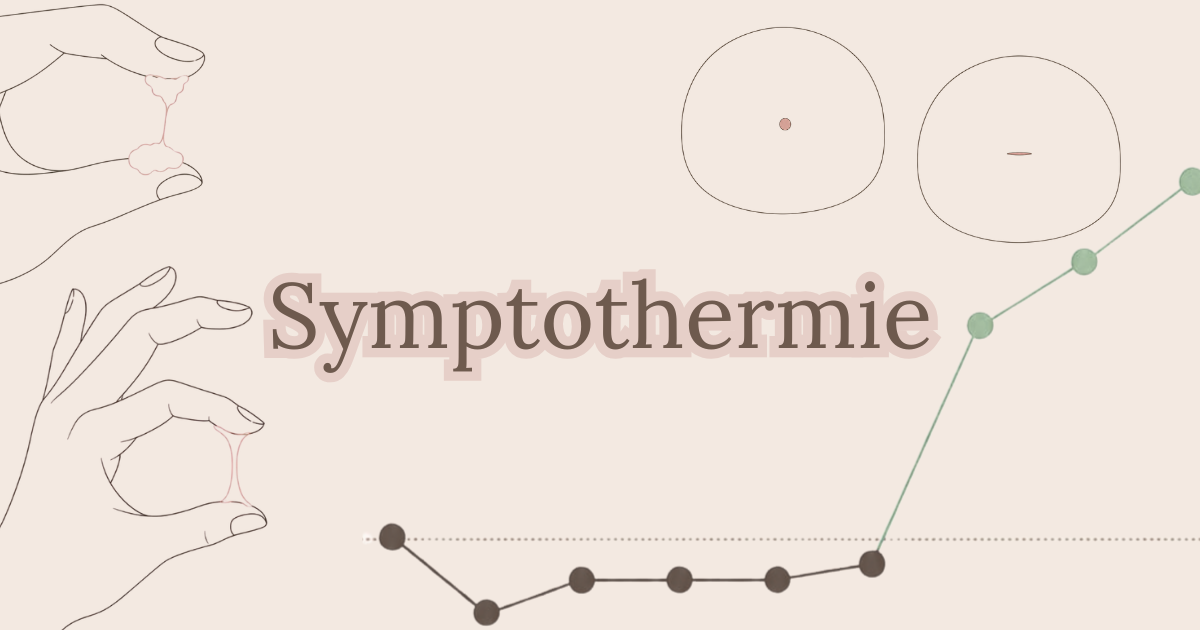
This is one of the principles of symptothermal contraception: different signs provide different information. The
cervical mucus primarily indicates the fertile window; the LH surge generally signals that ovulation is imminent; and the temperature then reflects the post-ovulatory hormonal change.
Studies comparing temperature, cervical mucus, LH, and ultrasound show that these markers are temporally linked to ovulation, but with enough variability to justify not interpreting any single sign in isolation. [3,8]
Pain, tender breasts, libido: Can we trust these signs?
Some women experience pelvic pain, light spotting, breast tenderness, or changes in libido around the time of ovulation. These symptoms may occur throughout the cycle, but
they vary too widely to confirm ovulation on their own.
A simple rule of thumb:
• Fertile cervical mucus: primarily indicates increasing fertility.
• Positive LH test: indicates a preovulatory hormonal surge.
• Pelvic pain, increased libido, tender breasts: possible symptoms, but nonspecific.
• Basal body temperature shift: retrospective information consistent with the transition to the postovulatory phase.
The absence of pain or other noticeable symptoms does not mean that ovulation did not occur.
What if my periods are irregular?
It is precisely when the cycle length varies that the calendar-based method most clearly reveals its limitations. Observing the signs of the current cycle allows you to track what is happening today rather than mathematically replicating previous cycles. [4,5]
If symptothermal contraception is used to prevent pregnancy, however, it is essential to follow the complete guidelines of a validated method: roughly identifying ovulation is not the same as using a contraceptive method correctly.
How can you tell if you haven't ovulated?
Nor is there a single symptom that can be used to diagnose an absence of ovulation. Not experiencing pain, not observing a lot of cervical mucus, or having a basal body temperature chart that is difficult to interpret is not sufficient to conclude that anovulation has occurred.
Conversely, experiencing bleeding does not automatically prove that ovulation occurred beforehand. Ovulatory disorders encompass a range of different conditions, from occasional absence of ovulation to more persistent issues. [9]
In cases of consistently very irregular or widely spaced cycles, a prolonged absence of periods, or difficulty conceiving, seeking medical advice can help identify the cause.
Is there such a thing as “bad ovulation”?
Google searches often turn up the terms “poor ovulation” or “low-quality ovulation.” However, these terms do not correspond to a diagnosis that can be made based on symptoms alone.
There are ovulatory disorders, which have a specific medical classification; however, neither pain, nor a particular type of cervical mucus, nor a single temperature reading can be used to assess the “quality” of an egg or an ovulation event. [1,9]
Tracking Ovulation: What You Need to Know
Identifying ovulation isn’t about looking for a single symptom. Cervical mucus is the primary indicator of rising fertility. LH tests detect a hormonal signal that generally precedes ovulation. Certain symptoms may accompany it but aren’t specific to it. Finally, the rise in body temperature occurs after the fact and indicates the transition to a post-ovulatory hormonal state.
It is therefore the timing and the combination of these signs that make cycle tracking truly informative.
The cycle cannot be predicted. It must be observed.
Frequently Asked Questions
Cervical mucus appears after the dry phase that follows menstruation, when estrogen levels rise. It becomes increasingly fertile as ovulation approaches, then disappears afterward. In women with short cycles, it may appear very early, sometimes as soon as menstruation ends.
Cervical mucus, changes in the cervix, the urinary LH surge, and the basal body temperature shift are the main markers used to track the ovulatory period. However, they do not all provide information about the same
stage of the process.
At home, no single symptom directly indicates follicular rupture. A temperature shift consistent with the progression of other signs is consistent with the transition to the postovulatory phase. When medical confirmation is necessary, hormone testing or ultrasound monitoring may be used, depending on the situation. [1,3]
There is no single number of days that applies to all women or all cycles. The day of ovulation can vary from one cycle to the next. [4,5]
Ovulation refers to the release of the egg: it is a single event. The fertile window, on the other hand, spans several days and is typically defined as the six days ending on the day of ovulation. [2]
Some women may experience pelvic pain around the time of ovulation, but this alone is not enough to confirm that ovulation has occurred.
Not necessarily. It detects the rise in LH that typically precedes ovulation, but does not directly confirm that the follicle has ruptured. [1,3]
There is no single symptom that can be used to diagnose anovulation. Very irregular or widely spaced cycles may warrant an evaluation, but a definitive diagnosis can only be made through appropriate testing. [9]
Sources
opinion. Fertility and Sterility. 2021;116(5):1255–1265. doi:10.1016/j.fertnstert.2021.08.038. PMID: 34607703.
2. Practice Committee of the American Society for Reproductive Medicine; Practice Committee of the Society for Reproductive
Endocrinology and Infertility. Optimizing natural fertility: a committee opinion. Fertility and Sterility. 2022;117(1):53–63.
doi:10.1016/j.fertnstert.2021.10.007. PMID: 34815068.
3. Su HW, Yi YC, Wei TY, Chang TC, Cheng CM. Detection of ovulation: a review of currently available methods. Bioengineering &
Translational Medicine. 2017;2(3):238–246. doi:10.1002/btm2.10058. PMID: 29313033.
4. Malliou-Becher MN, Herrmann PM, Freis A, et al. Variations in ovulation time and menstrual cycle characteristics: analysis of a
prospective long-term cohort study. Human Reproduction. 2026;41(6):959–968. doi:10.1093/humrep/deag057. PMID:
41968388.
5. Wilcox AJ, Dunson D, Baird DD. The timing of the “fertile window” in the menstrual cycle: day-specific estimates from a
prospective study. BMJ. 2000;321:1259–1262. doi:10.1136/bmj.321.7271.1259. PMID: 11082086.
6. Bigelow JL, Dunson DB, Stanford JB, Ecochard R, Gnoth C, Colombo B. Mucus observations in the fertile window: a better
predictor of conception than timing of intercourse. Human Reproduction. 2004;19(4):889–892. doi:10.1093/humrep/deh173.
PMID: 14990542.
7. NICE. Fertility problems: assessment and treatment. NG257. Section 1.18, investigation of ovulatory disorders. Current
guidance accessed September 2026.
8. Ecochard R, Boehringer H, Rabilloud M, Marret H. Chronological aspects of ultrasonic, hormonal, and other indirect indices of
ovulation. BJOG. 2001;108(8):822–829. doi:10.1111/j.1471-0528.2001.00194.x. PMID: 11510707.
9. Munro MG, Balen AH, Cho SH, et al. The FIGO Ovulatory Disorders Classification System. Human Reproduction.
2022;37(10):2446–2464. doi:10.1093/humrep/deac180. PMID: 35984284.