The cervix: Watch for this sign throughout your cycle


The cervix: Watch for this sign throughout your cycle
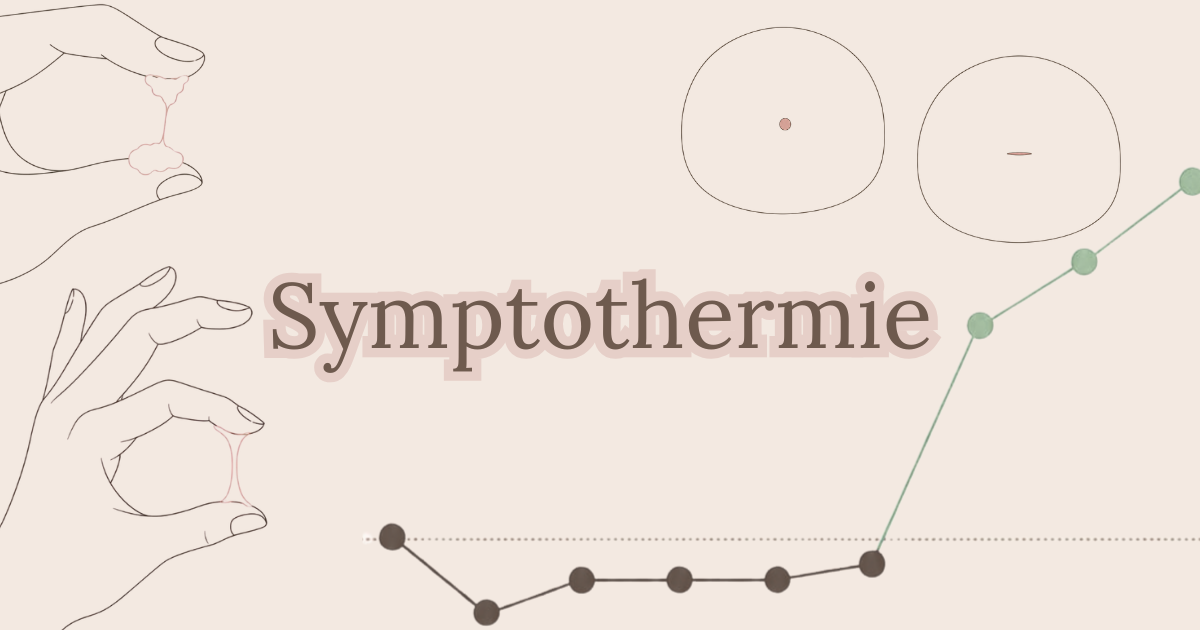
Although less well-known than temperature or cervical mucus, the cervix is actually the third sign in the symptothermal method. Throughout the cycle, it changes in height, firmness, and openness, and these changes also reveal where you are in your cycle. It’s a valuable additional sign, especially on days when cervical mucus is difficult to interpret.
This guide explains what the cervix is, how it changes between the fertile and non-fertile periods, how to observe it safely and effectively, and how to incorporate it into the method.
What is the cervix?
The cervix is the lower part of the uterus, where it connects to the vagina. It acts as a sort of gateway to the uterus and can be felt at the back of the vagina. Under the influence of hormones during the menstrual cycle, this gateway changes: it opens or closes, moves up or down, and softens or hardens.
These variations are not random: they closely follow the phases of the cycle. This is precisely what makes them a sign to watch for, just like cervical mucus and temperature.
How the cervix changes throughout the cycle
The cervix is assessed based on three characteristics that are considered together: its height (high or low in the vagina), its firmness (soft or firm), and its openness (open or closed). These three factors change in tandem.
During the fertile period: the cervix is high, soft, and open
As ovulation approaches, under the influence of estrogen, the cervix moves up toward the back of the vagina, becomes softer, and opens slightly. It may then become difficult to reach with a finger—sometimes impossible. To get a sense of its consistency, many people compare its firmness: far from ovulation, it’s as firm as the tip of the nose; during the fertile window, it becomes as soft as an earlobe. These changes make it easier for sperm to pass through.
During the non-fertile period: the cervix is low, firm, and closed
At the beginning of the cycle, and then after ovulation due to the effects of progesterone, the cervix drops back down, becomes firm again, and closes. It is then easier to reach. This is its resting position, the one that protects the uterus outside the fertile window.
This cycle of opening and closing explains why the cervix is an indicator of fertility: its texture and position reflect the stage of the cycle.
How to Safely Examine Your Cervix
Cervical self-examination, also known as self-palpation, is simple but requires some precautions and a little practice before it becomes meaningful.
Hygiene Rules
Wash your hands thoroughly before each observation, and make sure your fingernails are short so you don’t hurt yourself. This is the most important precaution.
Proper Posture and Technique
Always use the same position from one day to the next—for example, with one foot resting on the edge of the bathtub, or while squatting. Insert a finger (usually the middle finger) into the vagina to feel the cervix, then note its height, firmness, and degree of dilation. Consistency in your position is essential, as it is the only way to ensure your observations are comparable.
The Right Time
It’s best to check once a day, at the same time, usually in the evening. And just as with cervical mucus, start checking as soon as your period ends so you can establish a baseline for your cervix well before ovulation: it’s by knowing what your cervix looks like at rest that you’ll be able to recognize any changes.
Be patient: It often takes several cycles to learn to recognize changes in your cervix. At first, the differences are subtle; they become obvious as you get used to it.
What role does the cervical mucus play in the symptothermal method?
Here’s the key point, and this is what distinguishes rigorous content from sloppy content. The collar is a secondary feature, not a primary one.
Ovulation is never confirmed based on cervical changes alone. It is always observed as a supplementary indicator as part of the dual-monitoring method: it is the combination of two signs that allows you to track your cycle—in this case, temperature, which confirms ovulation, combined with cervical mucus or, if that is not available, cervical changes.
The cervix is particularly useful as a substitute indicator: on days when cervical mucus is difficult to read, irregular, or scarce, observing the cervix can serve as a secondary indicator. This is especially helpful for women who notice very little cervical mucus.
And let’s be honest: it’s entirely possible to practice the symptothermal method without ever checking your cervix. Many women rely solely on temperature and cervical mucus, and that’s perfectly fine. Checking your cervix is just another tool in your arsenal—not a requirement.
What role does the cervical mucus play in the symptothermal method?
Here’s the key point, and this is what distinguishes rigorous content from sloppy content. The collar is a secondary feature, not a primary one.
Ovulation is never confirmed based on cervical changes alone. It is always observed as a supplementary indicator as part of the dual-monitoring method: it is the combination of two signs that allows you to track your cycle—in this case, temperature, which confirms ovulation, combined with cervical mucus or, if that is not available, cervical changes.
The cervix is particularly useful as a substitute indicator: on days when cervical mucus is difficult to read, irregular, or scarce, observing the cervix can serve as a secondary indicator. This is especially helpful for women who notice very little cervical mucus.
And let’s be honest: it’s entirely possible to practice the symptothermal method without ever checking your cervix. Many women rely solely on temperature and cervical mucus, and that’s perfectly fine. Checking your cervix is just another tool in your arsenal—not a requirement.
When is cervical examination less reliable?
Certain situations make cervical examination difficult or unreliable: immediately after sexual intercourse, in the event of an infection, after childbirth (when the cervix retains an altered shape), or while using hormonal birth control, which can distort all the signs. In these cases, it is best to rely on other indicators and, if in doubt, seek advice from a trained professional.
The collar—a sign to cross
The cervix rounds out the picture of fertility signs: cervical mucus provides an early indication, body temperature confirms it, and the cervix reinforces the reading—especially when cervical mucus is absent. None of these signs is sufficient on its own; it is the combination of them that gives the symptothermal method its precision and reliability.
To understand the method as a whole, check out our comprehensive guide to the symptothermal method. And to learn more about the other two signs, read our articles on basal body temperature and cervical mucus.
Frequently Asked Questions
During the fertile window, as ovulation approaches, the cervix becomes high, soft, and open due to the effects of estrogen. It moves upward toward the back of the vagina and may become difficult to reach. Its texture softens—it is often compared to an earlobe—whereas during the non-fertile period, it is firm like the tip of the nose.
Compare your observations from one day to the next, always while in the same position. A cervix that rises, softens, and slightly opens indicates that your fertile window is approaching. But the cervix alone isn’t enough: you should always interpret it in conjunction with your temperature and, ideally, your cervical mucus.
A low, firm, and closed cervix corresponds to the non-fertile phases of the cycle—at the beginning of the cycle and after ovulation. However, infertility should never be determined based on the cervix alone: only confirmation of ovulation through temperature, combined with other signs, allows us to consider the fertile window closed.
Around the time of ovulation, the cervix opens slightly and softens. On palpation, the opening is subtle and requires experience to detect; it is primarily the combined changes in height and firmness that guide the assessment, rather than the opening alone.
Yes, absolutely. The cervix is a supplementary indicator. The method relies primarily on temperature and cervical mucus, and its effectiveness remains the same even without observing the cervix. The cervix is useful mainly as an alternative indicator when the cervical mucus is difficult to interpret.
Sources
Frank-Herrmann P., Heil J., Gnoth C., et al. “The effectiveness of a fertility awareness-based method to avoid pregnancy in relation to a couple’s sexual behavior during the fertile time: a prospective longitudinal study.” Human Reproduction, 2007, vol. 22, no. 5, pp. 1310–1319. DOI: 10.1093/humrep/dem003.
World Health Organization. “A prospective multicenter trial of the ovulation method of natural family planning. II. The effectiveness phase.” Fertility and Sterility, 1981, vol. 36, no. 5, pp. 591–598.