Basal Body Temperature

Basal Body Temperature: How to Measure and Interpret It
Every morning, even before you fully open your eyes, your body gives you valuable information about where you are in your cycle. That information is your basal body temperature. When measured and interpreted correctly, it becomes one of the most reliable indicators for understanding your cycle. But you still need to know what it really tells you—and what it doesn’t.
In this article, you’ll learn exactly what basal body temperature is, how to measure it correctly, how to interpret it, and—most importantly—why it becomes truly meaningful when combined with another sign of your cycle.
What is basal body temperature?
Basal body temperature is your body temperature at complete rest—that is, in the morning, upon waking, before getting out of bed, and before engaging in any activity. It is the lowest and most stable temperature of the day because your body slows down at night: your metabolism, breathing, and muscle activity are at their lowest levels.
As soon as you move, speak, or stand up, your temperature rises again. That’s why it’s called “basal” temperature: it’s your baseline, the reference point from which everything else varies.
What makes it interesting for tracking the cycle is that it isn't constant from one end of the month to the other. It closely follows hormonal fluctuations, and it is this pattern that tells a story.
Why Does the Temperature Change During the Cycle?
The menstrual cycle consists of two main phases, separated by ovulation, and the basal body temperature changes between the two.
Before ovulation, during the follicular phase, body temperature remains fairly low, generally around 36.2 to 36.5 °C, with slight day-to-day variations. This is the period when estrogen dominates.
Immediately after ovulation, the corpus luteum forms in the ovary and begins to produce progesterone. Progesterone has a thermal effect: it causes a slight rise in basal body temperature, on the order of 0.2 to 0.5 °C. This rise establishes a high plateau that persists until the end of the cycle.
If pregnancy occurs, the temperature remains high. Otherwise, progesterone levels drop, the temperature falls, and menstruation begins: a new cycle starts.
It is this transition from a low level to a high level—and its duration—that makes thermal observation so valuable.
What the temperature confirms—and what it does not predict
Here’s the key point to remember: basal body temperature does not predict ovulation; it confirms it.
The rise in temperature occurs after ovulation, once progesterone is produced. By the time you see your temperature rise, ovulation has already taken place. This is crucial information that completely changes how you interpret this sign.
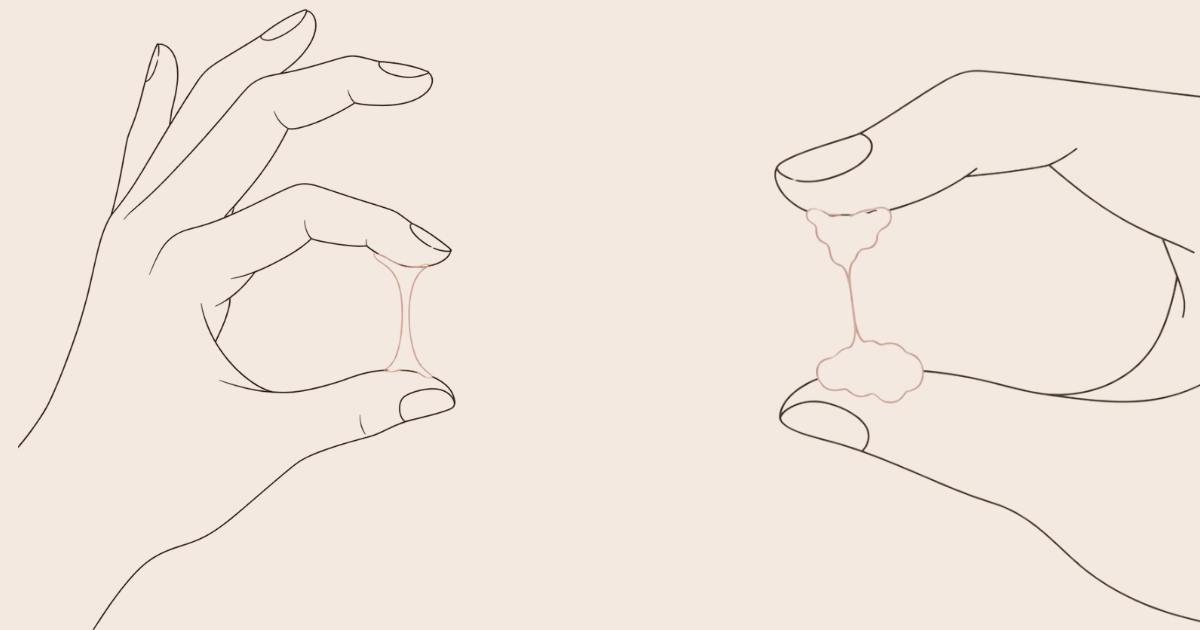
Basal body temperature is therefore a confirmatory sign, not a predictive one. It tells you with certainty that ovulation has already occurred, but it does not warn you that it is approaching. To predict ovulation, you need another sign: cervical mucus, which changes before ovulation.
That is exactly why the symptothermal method never relies on temperature alone. It always cross-checks two signs: the cervical mucus that signals ovulation and the temperature that confirms it. This is called “double-checking,” and it is what makes cycle tracking both precise and reliable.
How to Take Your Basal Body Temperature, Step by Step
Basal body temperature varies by only a few tenths of a degree. In other words, accuracy and consistency are everything. Here are the guidelines to follow.
The Right Thermometer
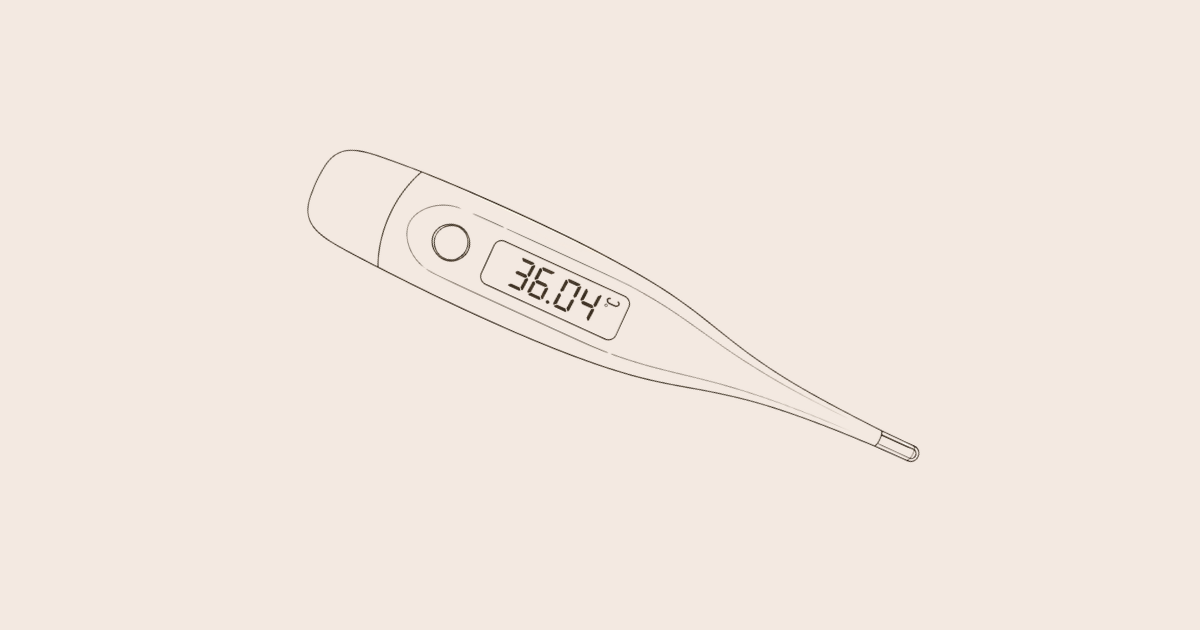
Choose a thermometer that displays two decimal places (for example, 36.57 °C, not 36.5 °C). A standard fever thermometer, which is calibrated to the nearest tenth, is not accurate enough to detect such subtle differences. Use the same thermometer throughout the cycle.
The Right Time
Take your temperature in the morning, as soon as you wake up, before getting out of bed, before drinking, speaking, or checking your phone. Ideally, take it at similar times each day, after at least a few hours of sleep. The more consistent your measurement conditions are, the easier it will be to interpret your trend line.
In practice, it is recommended that you get at least 3 to 4 hours of uninterrupted sleep before the measurement, so that your body has reached its true state of rest. And it doesn’t have to be exactly one hour to the minute: the method allows for a margin of about an hour and a half around your usual bedtime.
The Right Path
There are three possible routes of administration: oral (under the tongue), vaginal, or rectal. The vaginal and rectal routes are often more consistent than the oral route. The key is not to choose “the best” one, but to choose one and stick with it for the entire cycle, since the results vary slightly from one route to another.
A Good Habit
Record your temperature every day, along with anything that might have affected it: a very short night’s sleep, a fever, alcohol the night before, waking up at an unusual time, or travel. These factors don’t invalidate your observations; they provide context: a slightly higher reading can sometimes be explained by a simple restless night.
When should you start, and how often?
The easiest way is to start on the first day of your cycle—that is, the first day of your period (a bright red, heavy flow, not just spotting). That way, you track your cycle from the very beginning, and your chart tells the whole story.
Ideally, especially at first, you should take your temperature every morning: it’s by tracking it daily that you’ll learn to read your cycle the fastest. With experience, you can ease up a bit—the key is to have enough data points to identify the transition from the low phase to the high phase. But as a beginner, consistent daily tracking remains your best ally.
And if you start partway through a cycle, that's okay: your first measurements will serve as practice, and the next cycle will start off on a clean slate.
Shift work, night shifts, waking up at night
What should you do if you work nights, if your schedule is constantly changing, or if your sleep is interrupted by a baby? The rule remains the same: take your temperature after your main sleep period, when you “really” wake up, regardless of what time it is. So, someone who sleeps during the day should take their temperature when they wake up in the afternoon.
Irregular nights make the curve a little more erratic, which is normal. Two strategies can help: consistently note short or restless nights as disruptions, and remember that it’s the overall trend that matters, not a single data point. If your schedule is truly chaotic, guidance from a trained professional will help you interpret the data in a way that fits your lifestyle.
How to Interpret Your Curve
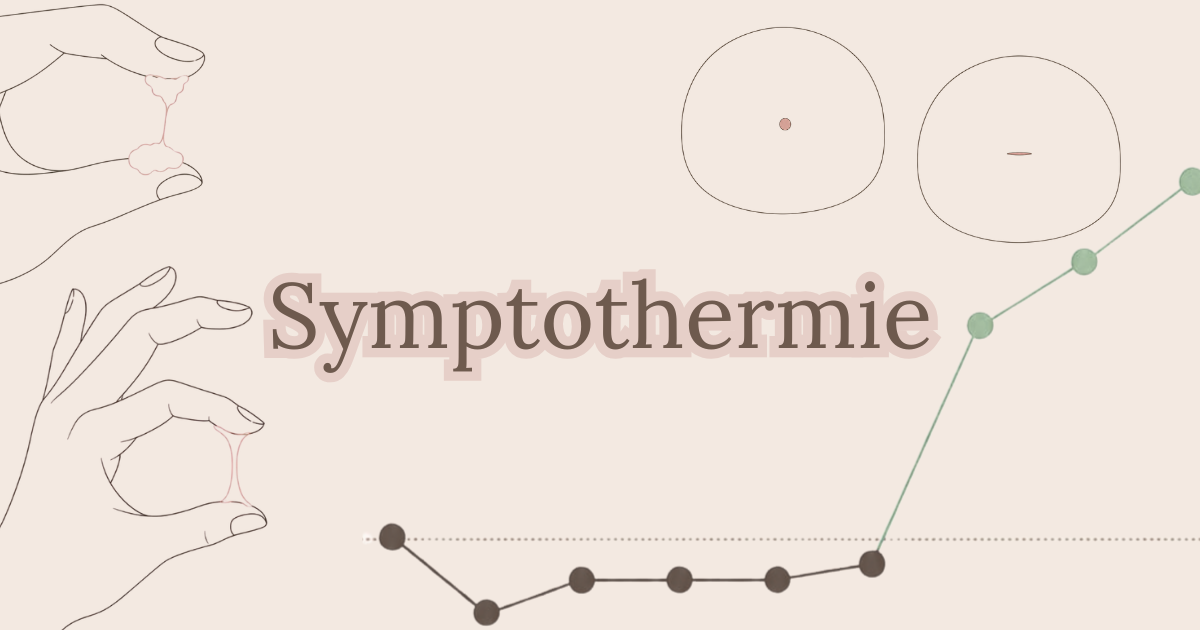
When plotted day by day on a graph, your temperatures form a two-part curve: a series of relatively low points, followed by an upward shift that sets in and remains steady. This shift marks the moment when ovulation occurred.
In the symptothermal method, a single high reading is not considered sufficient: it is the persistence of the plateau over several consecutive days that confirms ovulation, and this is cross-referenced with changes in cervical mucus. An isolated reading means nothing; it is the overall trend that matters.
Don't get discouraged if your first charts seem confusing. Learning to read your temperature takes time: it often takes two or three cycles to recognize your own pattern. And every cycle you track teaches you something new about yourself.
Factors That Can Skew a Measurement
Basal body temperature is sensitive. Several factors can cause a single reading to be off: a night’s sleep lasting less than a few hours, alcohol consumption the night before, a fever, a significantly different time of day for taking the reading, jet lag, or sometimes poor sleep. It’s nothing serious: just make a note of these circumstances. The interpretation will take them into account, and a single reading never has the final say.
Temperature: Just One of Many Signs
As you can see, basal body temperature is a valuable indicator, but it’s most meaningful when used as part of a comprehensive method. On its own, it only confirms ovulation after the fact. When combined with cervical mucus, it allows you to track your cycle with great precision, from start to finish.
That is the whole point of symptothermal contraception, an observation method based on this combination of signs. If you’d like to understand the method as a whole, check out our comprehensive guide to symptothermal contraception. And to learn more about the second key sign, read our article on cervical mucus.
Tracking your temperature is the first step toward gaining a deeper understanding of your body, no matter what your goal is: getting to know yourself better, supporting your efforts to conceive, or simply understanding what’s happening inside you, month after month.
Frequently Asked Questions
In the morning when you wake up, before getting out of bed and before doing anything else, use a thermometer that reads to two decimal places, always taking the temperature the same way (orally, vaginally, or rectally) and under conditions that are as consistent as possible from one day to the next. Consistency is what ensures reliability.
There is no single “correct” universal value: every woman has her own range. As a general guideline, body temperature is often around 36.2 to 36.5 °C before ovulation, then rises by 0.2 to 0.5 °C to reach a higher plateau afterward. What matters is not the absolute number, but the difference between your two phases.
The temperature remains at a high plateau throughout the second half of the cycle, due to the effects of progesterone. It does not rise just before menstruation; on the contrary, it generally drops again as menstruation approaches, when progesterone levels fall. It is this drop that signals the return of menstruation.
Basal body temperature cannot be used to diagnose pregnancy. At most, a plateau of high temperatures that lasts significantly longer than the usual duration of your second phase may be a clue. But it is never a confirmation: only a pregnancy test can provide a definitive answer. The temperature offers a clue; the test provides the answer.
Sources
World Health Organization. “A prospective multicenter trial of the ovulation method of natural family planning. II. The effectiveness phase.” Fertility and Sterility, 1981, vol. 36, no. 5, pp. 591–598.
NFP Working Group. Natural and Safe — The Practical Guide (Sensiplan). Reference Manual for the Symptothermal Method.